

When Showing Up Takes Courage: How to Lead While You Are Healing
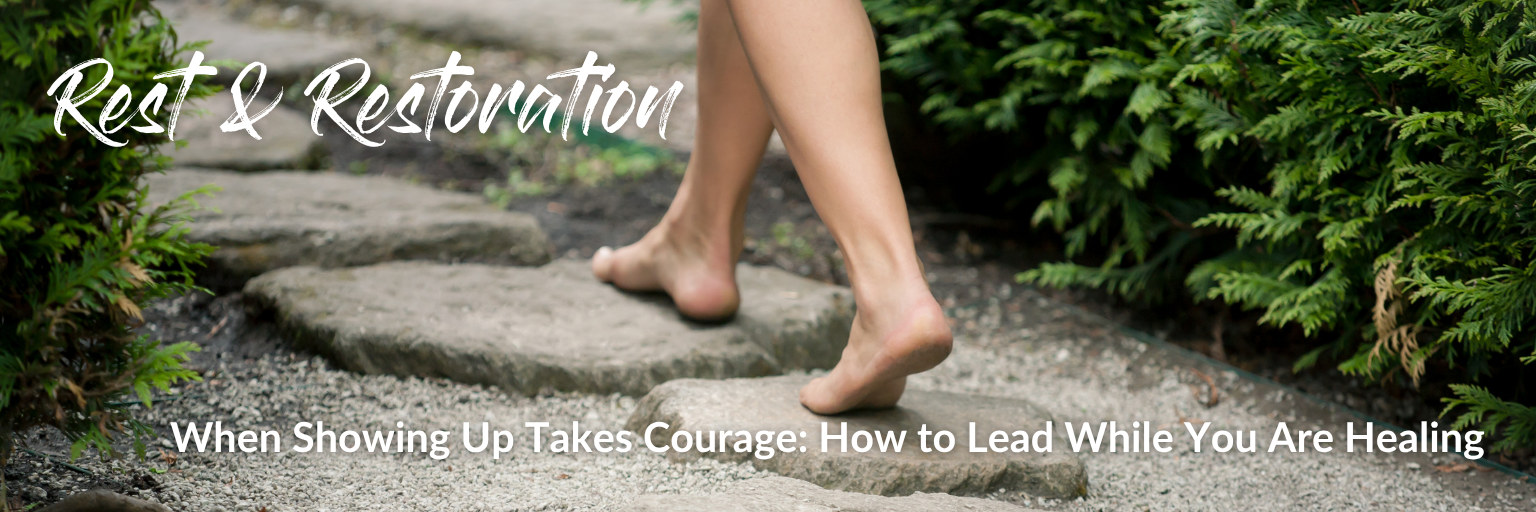
There are seasons in life and leadership when simply showing up takes courage.
From the outside, it may look like you're moving forward—leading meetings, caring for your family, making decisions, and carrying responsibilities. But internally, you may be navigating grief, recovering from trauma, or trying to find your footing after a painful setback. In these moments, leadership becomes less about performance and more about perseverance.
Grace to you…lots of grace if you are in this space.
Many of us have been taught to push through pain. To stay productive. To keep moving.
But healing doesn't work on a performance timeline.
The truth is that grief, trauma, and chronic stress don't just affect our emotions. They impact our nervous system, our ability to trust, our capacity for self-control, and the way we interpret the world around us.
When we've been hurt, disappointed, betrayed, or overwhelmed, our brains naturally become more vigilant.
We may second-guess people who genuinely care about us.
We may feel the need to control every outcome because uncertainty no longer feels safe.
We may become reactive, withdrawn, guarded, or exhausted without fully understanding why.
This isn't weakness.
It's often a nervous system doing its best to protect us.
I’ve walked this out in my own life with the passing of parents, sadness in broken relationships and other heartaches that life presents. And I’ve also walked alongside countless brave souls as they adjust to the magnitude of their grief.
The challenge for leaders is learning how to honor our healing without abandoning our purpose. Even if we simply just need to pause and regroup.
Forward momentum doesn't always mean moving faster.
Sometimes it means taking one faithful step while giving yourself permission to recover.
Sometimes it means asking for help instead of carrying everything alone.
Sometimes it means recognizing that what appears to be resistance, distrust, or over-control may actually be unhealed pain asking for attention.
The healthiest leaders learn to hold two truths at the same time:
I am healing.
And I am still moving forward.
One does not cancel out the other.
In fact, some of the most resilient, compassionate, and emotionally mature leaders are those who have learned to walk through hardship without denying its impact.
They develop greater self-awareness.
They become more patient with others.
They learn the difference between reacting from old wounds and responding from present wisdom.
And they discover that leadership is not about being unaffected by life—it's about remaining connected to yourself while life unfolds.
The Weekly Shift: A Simple Daily Practice
At the end of each day, ask yourself three simple questions:
What gave me energy today?
What depleted me today?
What might my nervous system need from me right now?
Notice the answers without judgment.
Healing often begins with awareness.
As you continue your journey, remember this:
You do not have to choose between recovery and growth.
You can grieve and grow.
You can heal and lead.
You can honor your story while continuing to write new chapters.
Sometimes the strongest form of leadership is simply refusing to abandon yourself while moving forward one step at a time.