
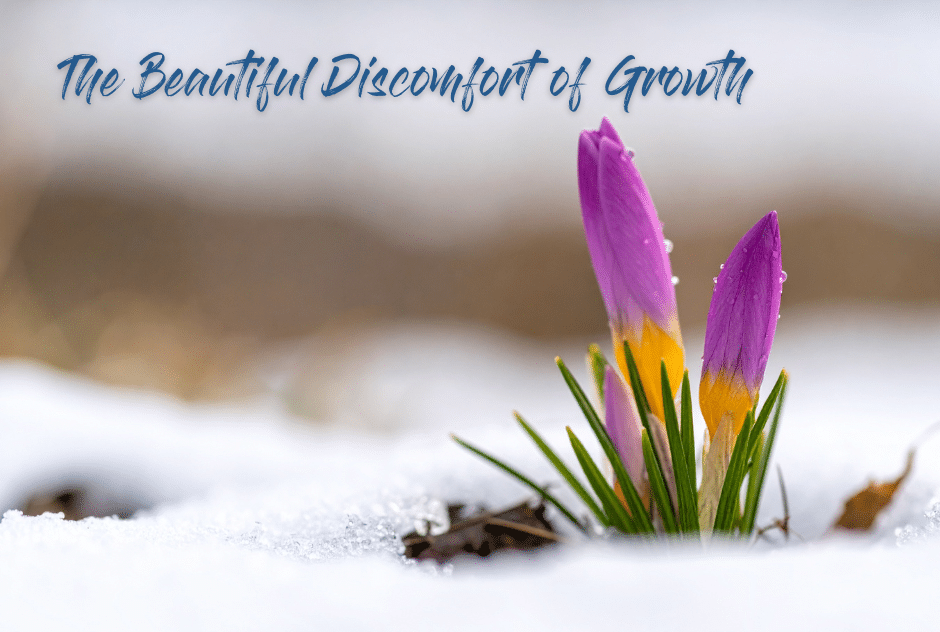
If growth were comfortable, everyone would be doing it all the time.
But real growth—the kind that actually changes us—almost always begins with a knot in the stomach, a wobble in our confidence, or that quiet thought: “I don’t know if I can do this.” Discomfort isn’t a sign you’re doing it wrong. More often, it’s a sign you’re right on time.
The truth is: comfort is great for rest, but it’s a terrible place to live if you want to become more of who you’re meant to be.
Discomfort is the stretching of your inner world to make room for a larger life. It’s the signal that your old patterns are being outgrown. It’s the invitation to trade what’s predictable for what’s possible.
So how do people keep going when growth gets hard? Here are three principles that make the difference:
1. They Normalize the Awkward Phase
People who continue to grow don’t interpret discomfort as failure—they interpret it as a process.
They expect the messy middle. They know that learning something new, setting a boundary, changing a habit, or stepping into a bigger role will feel clumsy before it feels natural. Instead of asking, “What’s wrong with me?” they ask, “What is this teaching me?”
When you normalize the awkward phase, you stop quitting too early. You stop making discomfort mean you’re not cut out for it. You start seeing it as evidence that something new is being built in you.
2. They Stay Anchored to Their “Why”
When things get hard, motivation alone won’t carry you. Clarity will.
People who keep going reconnect to why they started: the life they want to live, the person they want to become, the values they want to embody. Their “why” becomes an anchor when emotions are loud, and progress feels slow.
On hard days, they don’t ask, “Do I feel like doing this?”
They ask, “Is this aligned with who I’m becoming?”
That shift keeps them moving—even in small, imperfect steps.
3. They Practice Self-Compassion, Not Self-Abandonment
Growth without kindness turns into burnout. Growth with compassion becomes sustainable.
People who keep going don’t beat themselves up for struggling. They don’t shame themselves for needing rest, support, or a reset. They treat themselves like someone worth encouraging, not someone who needs to be threatened into change.
They learn to say:
“This is hard—and I’m still showing up.”
“I’m not there yet—and I’m still on the way.”
“I can be gentle with myself and still be committed to growing.”
Self-compassion doesn’t lower the bar. It keeps you in the game long enough to actually reach it.
Growth is not about becoming someone else. It’s about becoming more fully yourself. And that process will almost always ask you to leave something familiar behind—an old story, an old role, an old way of coping.
If you’re in a season that feels stretchy, uncertain, or emotionally demanding, take heart: you’re not broken—you’re becoming. And becoming is rarely comfortable, but it is always meaningful.
You can discover more about clarity, confidence, and courage, what I call 3C Living, in The Life You’re Made For.